
LiveTheVanLife Restorations · La Paz, Baja Mexico
Get inspired,
available upgrades
Keep the character. Build in the possibilities.
From a more confident daily drive to a beautifully equipped home on wheels. Explore 254 upgrade and restoration ideas for the Volkswagen Vanagon, T3 and T25, then tell us what your next chapter looks like.
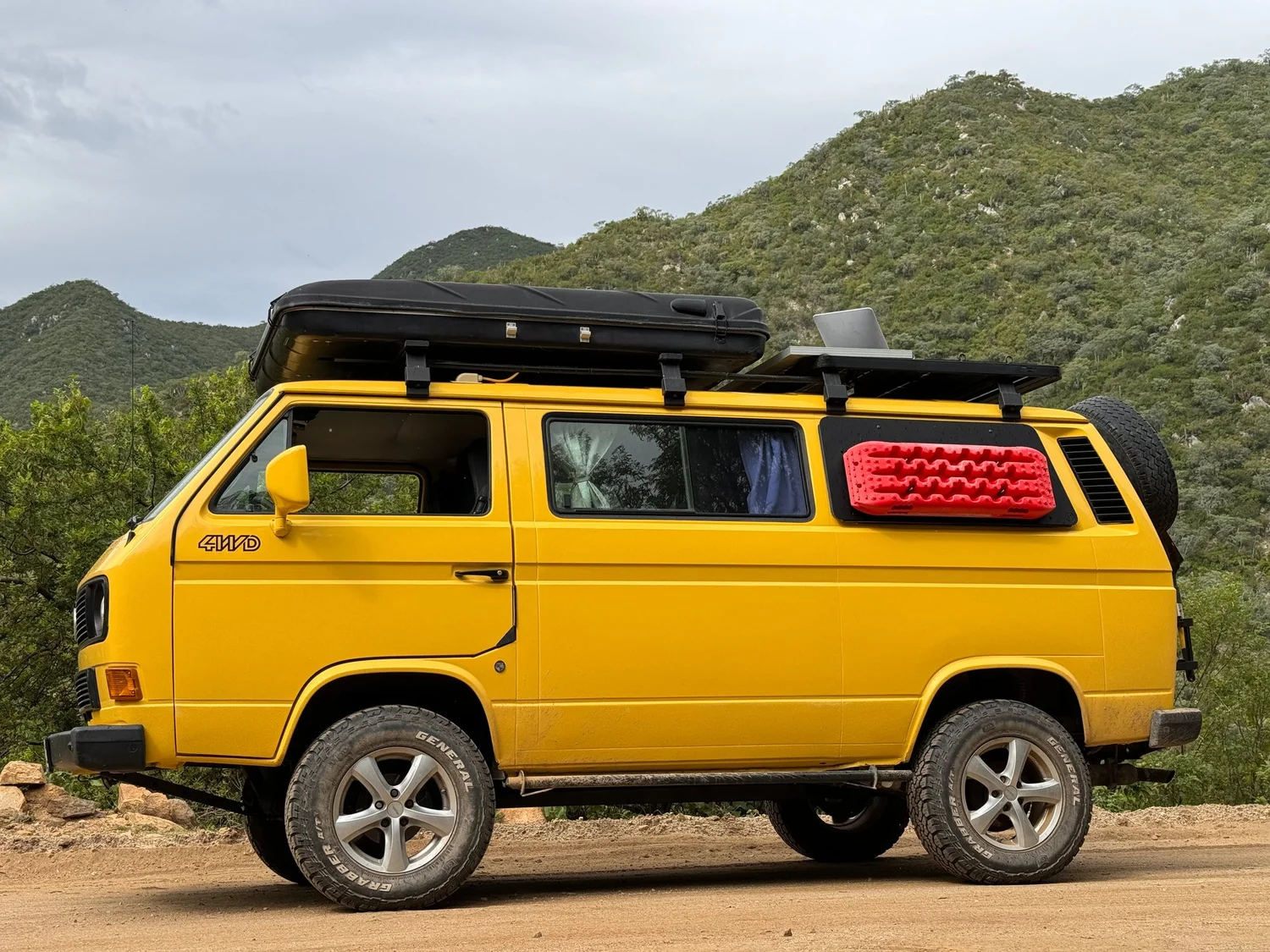
A starting point for your build
Dream broadly.
Build thoughtfully.
You do not need a complete restoration to make your van more enjoyable. Start with one improvement or bring us a whole wish list. Contact us to discuss your priorities, which upgrades fall within our current services, and what to do first.
This guide brings together established aftermarket options, restoration improvements, custom ideas, and specialist conversions. Product examples are for inspiration; fit, supply, installation scope, and pricing are confirmed for each project.
Our current engine work focuses on stock-style Vanagon engines and compatible upgrades. Engine conversions are included for inspiration and advice; we do not currently install them. Specialist ideas elsewhere are marked Feasibility review.
Find your next upgrade
What would make your van better?
Choose a starting point, search an idea, or open a category. Save your favourites as you go.
Browse by photo
See a detail you love? Choose a photo to explore that category, or use the filters below to find more ideas.
 A refreshed original engine →
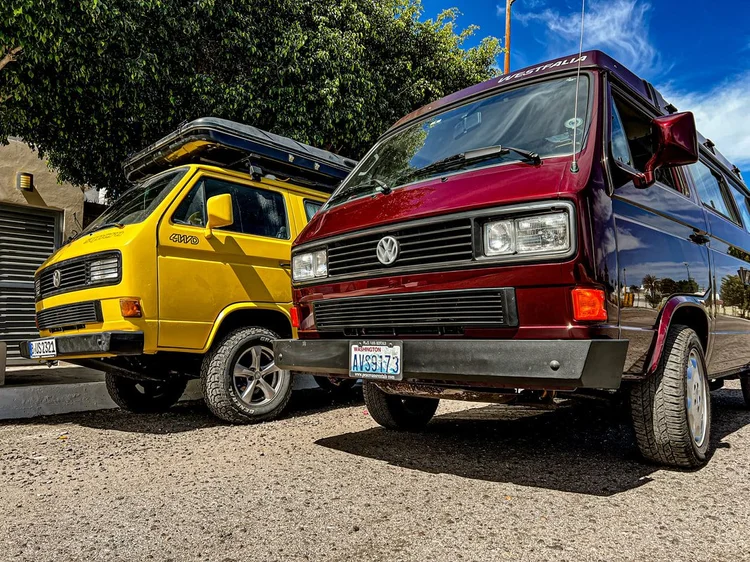 Bumpers & carrying gear →
 Light up the journey →
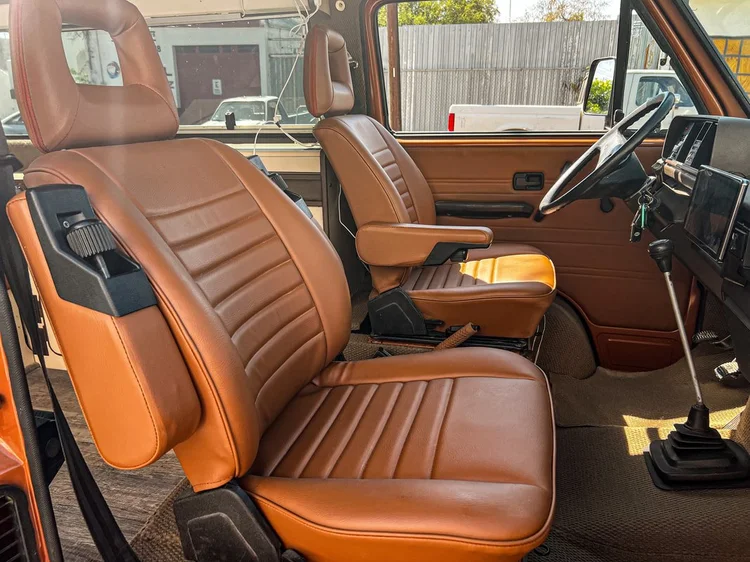 Make the interior yours →
 A more useful cockpit →
 A kitchen for the road →
 Create your camp →
 Sleep in comfort →
Photos from our website galleries. They show the pictured build or detail; equipment and fit vary. Open an upgrade photo for a closer look.
254 ideas across 24 categories
No matching ideas yet. Try a broader search or reset the filters.
01Engine upgrades & conversionsMore confidence on climbs, modern drivability, or a carefully improved original engine.15 ideas
Engine choice starts with your van's year, current engine, transmission, registration location, travel plans, and service access. A conversion is a complete system: cooling, exhaust, wiring, fuel delivery, gearing, and brakes all need to work together.
Waterboxer rebuild & displacement upgrades
Keep the original engine layout, with stock or enlarged displacement options. Match compression, fuel quality, cooling, and engine management to the chosen build.
GoWesty performance waterboxer
An aftermarket waterboxer route, including the 2700cc offering. The 2700 requires its specified engine management and supporting components; confirm the complete package.
Subaru EJ22 / EJ25 conversion
A widely supported flat-four conversion family. Donor year, engine condition, harness, emissions equipment, sump clearance, and transmission compatibility determine the right package.
Subaru later-generation engine conversion
Explore newer Subaru engine families where a supported conversion package exists. Electronics and drivetrain integration vary substantially; this needs a feasibility review.
Subaru six-cylinder conversion
Consider an SVX or other supported six-cylinder configuration for a specialist build. Engine clearance, cooling, torque capacity, and long-term parts support deserve early review.
Subaru turbo conversion
A performance-focused project with major fuel, cooling, exhaust, gearbox, and brake implications. Discuss a realistic power target and registration requirements before choosing hardware.
Bostig Honda K24Z conversion
A current Honda four-cylinder conversion platform. Select the exact supported donor and kit, then plan mounting height, exhaust, electronics, and accessory drive as a package.
Bostig Ford Zetec conversion
A documented Ford four-cylinder conversion route. Confirm current kit supply, suitable donor availability, and the support plan before committing to a new installation.
VW / Audi 1.8T conversion
Turbocharged VW-family power with established conversion packages. Kit specification, donor electronics, heat management, and gearbox loading are central to the design.
VW TDI diesel conversion
A torque-focused option for a carefully engineered build. Donor code, gearing, intercooling, exhaust, vibration, and emissions equipment must be evaluated together.
VW inline-four petrol conversion
Explore supported VW 2.0-litre and related inline-four layouts. Existing diesel hardware or a previous conversion changes what can be reused; parts support varies.
Air-cooled Type 4 rebuild & improvement
Preserve an early Vanagon's air-cooled character with a matched engine build, restored cooling tin, ignition, induction, and temperature monitoring.
Air-cooled to water-cooled conversion
An early van needs a complete radiator, coolant-pipe, heater, and electrical integration plan in addition to the new engine.
Electric drivetrain conversion
T3 electric conversion systems exist. Battery packaging, loaded range, charging access, axle weights, braking, certification, and specialist support require a full feasibility study.
Conversion finishing & drivability refinement
Improve an existing swap with documented wiring, engine mounts, throttle setup, diagnostics, service access, and correction of unresolved installation issues.
02Cooling, lubrication & engine protectionBuild a reliable foundation for hot weather and long journeys.11 ideas
Cooling parts differ between air-cooled vans, 1.9 and 2.1 waterboxers, diesels, Syncros, and conversions. Choose components for the actual installed system.
Complete cooling-system refresh
Renew the radiator, hoses, tanks, caps, thermostat, and pump as needed, then pressure-test and bleed the complete system.
Stainless-steel front-to-rear coolant pipes
Replace ageing long coolant pipes with a matched stainless system. Early, late, automatic, and Syncro layouts need different combinations.
Upgraded coolant junctions & elbows
Replace vulnerable connectors with compatible improved parts, while checking adjacent hoses, clearances, and mountings.
1.9-to-2.1 cooling-system conversion
A coordinated cooling-layout upgrade for suitable early waterboxers; it involves several components rather than one replacement hose.
Radiator fan, relay & wiring improvements
Restore dependable fan speeds and power supply. Additional controls should complement a functioning automatic cooling system.
Engine oil cooler & thermostat
Consider additional oil cooling for an engine and duty cycle that need it. A thermostatic design helps avoid unnecessary overcooling.
Oil pressure & oil temperature gauges
Make engine conditions easier to monitor with appropriate senders, clear readings, and retained factory warning functions.
Coolant level & temperature alarms
Add a clearly audible warning system or restore the original one, using sensors and thresholds appropriate to the engine.
Cylinder-head temperature monitoring
Useful for air-cooled builds, with properly installed probes and readings interpreted for the specific engine.
Engine-bay sealing & heat shielding
Renew seals, cooling tin, ducting, and exhaust shielding to manage heat and keep the engine's cooling path working correctly.
Conversion sump & ground-clearance protection
Choose a supported shortened sump, pickup, and guard combination without compromising oil capacity, pickup clearance, or service access.
03Fuel, injection, ignition & exhaustCleaner running, easier diagnosis, and attention to ageing fuel systems.11 ideas
Start by identifying the installed injection system and fuel plumbing. Replacement hose kits may omit injector hoses, hard lines, tank seals, or other important parts.
Complete fuel-hose renewal
Replace ageing supply and return hoses with compatible fuel-rated hose and correct fittings, including inspection of the entire route.
Fuel hard lines & firewall connections
Renew or improve hard lines, protected bulkhead passages, fittings, and abrasion protection where the van's layout requires them.
Fuel tank, filler & vent-system overhaul
Address tank corrosion, filler seals, expansion-tank hoses, venting, and fuel smells as one system.
Injector testing, cleaning & renewal
Check spray pattern, flow, seals, and engine-specific compatibility before choosing replacements.
Modern waterboxer engine management
Options such as GoWesty EFI replace major ageing management components. Early Digijet vans need additional conversion work compared with late Digifant vans.
MansiSpeed EFI for 1.9 / 2.1 waterboxers
Explore the engine-specific MansiSpeed management system. LiveTheVanLife is the official Mexican installer; confirm the exact engine, kit, and registration requirements.
Ignition & engine-harness refurbishment
Renew worn ignition parts, grounds, connectors, and damaged engine wiring to support dependable starting and running.
Fuel pump, filtration & pressure control
Match the pump, filters, regulator, and plumbing to the engine; pressure testing establishes what actually needs changing.
Stainless or improved exhaust system
Choose a durable, correctly supported exhaust with appropriate catalyst, oxygen-sensor positions, noise level, and heat clearances.
Intake, airbox & filtration improvements
Provide a sealed, serviceable intake with suitable filtration and protection from heat and splash; an intake alone does not guarantee more power.
Engine diagnostics & service information
Add accessible diagnostic connections where supported, a useful scan display, labelled components, and a build-specific maintenance record.
04Transmission, clutch & drivelineMatch the drivetrain to your engine, tyres, and the way you travel.12 ideas
Gear ratios and tyre diameter change cruising speed and climbing ability. More engine torque does not increase a gearbox's capacity; plan the complete combination.
Manual transaxle rebuild
Restore shift quality and inspect bearings, synchros, gears, and the final drive before adding power or taller tyres.
Stronger gears & gearbox components
Consider available upgraded gears, carriers, and supporting parts for the actual transmission code and expected load.
Custom gearing & final-drive selection
Choose ratios around engine characteristics, loaded tyre diameter, terrain, and comfortable cruising rather than simply chasing lower revs.
Transmission oil cooling & monitoring
Explore a filtered, pumped cooling system and temperature gauge where sustained duty justifies the additional complexity.
Torque-biasing differential
Improve traction with an appropriate differential for a supported manual or automatic transaxle; it behaves differently from a selectable locker.
Clutch & flywheel matching
Select clutch capacity, flywheel, release system, and pedal effort around the engine and transmission rather than the largest available pressure plate.
Shift-linkage overhaul
Renew bushes, joints, boots, and adjustment for clearer gear selection before considering a different shifter.
Short-shift or ergonomic shifter
Change shift movement or lever reach with a compatible kit after ensuring the linkage itself is healthy.
Automatic transmission overhaul & cooling
Assess the automatic gearbox, final drive, cooler, hoses, and operating temperature as a complete system.
Manual / automatic transmission conversion
A major project involving controls, mounts, driveline, wiring, and sometimes body changes; scope it before buying a donor.
Subaru gearbox conversion
Supported manual or automatic conversion routes may suit some builds. Layout, ratios, electronics, axle alignment, and parts supply need specialist review.
CV joints, axles & driveline mounts
Renew worn joints and mounts or select compatible higher-capacity components, checking articulation and travel after suspension changes.
05Syncro & four-wheel-drive systemsRestore useful traction and prepare a balanced adventure van.10 ideas
Syncro upgrades depend on the existing front differential, viscous coupling, lockers, gearbox, and suspension. Four matching tyres and correct drivetrain condition remain fundamental.
Viscous coupling assessment & renewal
Restore the intended all-wheel-drive behaviour by checking coupling condition and the complete drivetrain.
Driveshaft decoupler
Add selectable driveline disconnection with a compatible system and controls. Operation depends on the retained coupling or other drivetrain configuration.
Rear differential lock restoration
Repair the actuator, vacuum system, switch, indicator, and internal mechanism of an existing factory locker.
Rear differential lock retrofit
Explore a selectable rear locker where suitable parts and a compatible gearbox are available; this can require major transaxle work.
Front differential lock
A specialist traction upgrade with substantial steering and operating implications; discuss when and where it can be used.
Locker / decoupler vacuum-system renewal
Renew lines, reservoirs, valves, actuators, and indicators so the controls reliably match the drivetrain's state.
Propshaft rebuild & balancing
Address vibration with inspection of joints, alignment, mounts, and professional balancing as required.
Syncro drivetrain breathers & protection
Review breather routing, seals, guards, and vulnerable components for rough-road use without treating the van as waterproof.
Syncro-specific suspension & CV geometry
Match dampers, springs, travel limits, alignment, and joint angles to the intended loaded ride height.
2WD-to-Syncro conversion
A major structural and drivetrain conversion dependent on donor parts, fabrication, and approvals. This is a feasibility discussion, not a routine kit installation.
06Suspension, steering & ride qualityA van that feels composed on the highway and comfortable on rough roads.11 ideas
Start with a loaded weight assessment and worn-part inspection. Lift height, spring rate, damper travel, alignment, and tyre clearance must be considered together.
Complete suspension refresh
Renew worn bushes, ball joints, tie rods, bearings, and mounting hardware to recover the intended handling.
Touring shock absorbers
Choose quality dampers matched to standard or lightly modified suspension, vehicle weight, and preferred ride comfort.
Adjustable or reservoir dampers
Explore tunable dampers for a carefully matched suspension package, with accessible adjustment and appropriate mounting clearance.
Load-matched springs
Choose springs for the actual camper equipment and axle loads, including heavy rear carriers or an engine conversion.
Modest lift & clearance package
Add clearance with compatible springs, dampers, travel limits, and alignment; review CV angles and access height.
Lowered road suspension
A road-focused stance using matched components, with checks for bump travel, ground clearance, tyre rubbing, and alignment.
Levelling pads & spring spacers
Correct a measured stance issue where appropriate, without disguising overloaded axles or worn springs.
Anti-roll bar upgrade
Reduce body roll with a compatible bar and bush system, balancing highway feel against rough-road articulation.
Hydraulic power-steering refurbishment
Renew leaking lines, rack, pump, and mounts to restore consistent assistance and reduce fluid loss.
Electric power-steering conversion
A T3-specific column-assist system can ease low-speed manoeuvring. Confirm steering-column fit, electrical supply, and approval requirements.
Alignment & steering-wheel ergonomics
Finish suspension work with appropriate alignment and consider a compatible wheel that preserves visibility and a comfortable driving position.
07Brakes & stopping confidencePlan braking around the van's weight, wheels, and intended use.8 ideas
Brake improvements start with a sound hydraulic system and good tyres. Early and late 2WD, Syncro, and 16-inch Syncro hardware are not interchangeable by default.
Complete brake-system renewal
Restore discs or drums, pads or shoes, cylinders, calipers, hoses, and adjustment according to inspection findings.
Larger ventilated front brakes
Explore a matched front-brake kit for the van's year and hubs; verify wheel diameter and actual caliper clearance.
Rear disc-brake conversion
Consider a complete kit with correct hydraulic balance and a functioning parking brake, matched to the front setup.
Brake hose & hard-line replacement
Renew deteriorated hoses and corroded pipes with properly routed, securely supported components.
Master cylinder, booster & vacuum supply
Restore the assistance and hydraulic components before assuming a larger booster is the solution.
Brake fluid service & fade-resistant setup
Use specified fluid and suitable friction materials, with attention to heat management and the expected loaded duty cycle.
Parking-brake restoration
Renew cables, mechanisms, and adjustment so the parking brake works effectively with the installed rear brakes.
Brake system integration after an engine swap
Assess the finished van's weight, tyres, power, and brake balance together, followed by appropriate road testing.
08Wheels, tyres & spare-wheel solutionsChoose the right footprint for road trips, trails, and loaded campers.9 ideas
Load rating, offset, centre bore, fastener seating, brake clearance, and tyre diameter all matter. Larger wheels alone do not establish suitability.
Load-rated 15-inch wheels
Explore compatible wheels where the selected brakes clear and suitable tyres are available in the intended travel region.
Load-rated 16-inch wheels
A popular upgrade size with road and all-terrain choices; check rubbing, gearing effects, spare storage, and correct hardware.
Larger-diameter wheel packages
Consider bigger wheel sizes only with a documented load rating, useful tyre sidewall, and a complete clearance review.
Highway touring tyres
Prioritise wet braking, noise, comfort, and the correct load capacity for a van used mainly on paved roads.
All-terrain tyres
Choose an appropriate tread and carcass for mixed surfaces while considering weight, road noise, braking, and gearing.
Winter or seasonal tyres
Select tyres for the actual temperature and road conditions, with suitable load capacity and local requirements.
Full-size matching spare
Plan a compatible spare, mounting location, tools, and wheel-changing access; Syncro rolling circumference needs particular care.
Wheel studs, nuts & compatible hardware
Match fastener length, seat shape, and engagement to the chosen wheels, hubs, and any engineered adapter arrangement.
Tyre-pressure monitoring
Add a readable pressure and temperature system, using pressures established for the vehicle, tyres, and measured loading.
09House batteries & off-grid electricalA camper electrical system designed around what you actually use.12 ideas
Start with daily energy use, desired days between charging, and available space. Battery capacity, inverter power, cable sizing, fusing, and charging must be designed together.
Auxiliary house-battery system
Separate camping loads from the starter battery with a properly secured, protected, and serviceable installation.
LiFePO4 battery conversion
Choose a lithium battery with suitable protection and mounting, then review every charger, fuse, cable, and low-temperature charging requirement.
AGM house-battery option
An alternative where budget, charging compatibility, or storage conditions favour an AGM system; size usable capacity realistically.
Larger battery bank
Increase autonomy with matched components and a weight-and-space review. More capacity also needs sufficient charging capability.
Under-seat battery installation
Use otherwise valuable space only after measuring the exact enclosure, terminals, seat movement, restraints, and service clearance.
Battery monitor with shunt
Track current flow and usable state of charge more meaningfully than a voltage display alone.
Fused distribution & busbars
Organise camping circuits with accessible protection, covered terminals, labelled cables, and a clear wiring diagram.
Battery isolation & service disconnects
Make the system straightforward to shut down for storage or maintenance, with correctly rated switches and protected wiring.
Pure-sine inverter
Run suitable mains-powered appliances within a calculated power budget, allowing for start-up surges and battery limits.
Inverter / charger combination
Combine compatible shore charging and mains supply with properly designed protection, switching, earthing, and installation space.
USB-C, USB & 12V outlets
Add useful charging points near seats, beds, and work areas on appropriately protected circuits.
Portable power-station integration
Secure a removable power station and plan charging and appliance connections without unsafe backfeeding into the van's electrical system.
10Solar, alternator charging & shore powerMake the charging system work for travel days and parked days.10 ideas
Roof area and battery size are only part of the answer. Consider shade, heat, time driving, alternator capability, and the electrical supply at your destinations.
Roof-mounted solar panels
Create a fixed charging source with secure mounts, weatherproof cable entry, and space for roof movement and other equipment.
Portable solar connection
Add a correctly specified connection for panels that can be positioned in the sun while the van stays in shade.
MPPT solar charge controller
Match the controller to panel voltage and current, battery chemistry, cable lengths, and the proposed array.
DC-DC alternator charger
Control house-battery charging current and profile, particularly with lithium, within the alternator's realistic output and cooling capacity.
Higher-output alternator
Explore an engine-specific unit after checking mounts, belt drive, wiring, fusing, and hot-idle output requirements.
Starter-battery maintenance charging
Use a compatible arrangement to support the starter battery during storage or long stays without compromising house-battery isolation.
Modern shore-power inlet
Renew ageing hookup boxes and connections, with correctly rated cable, weather protection, and safe interior routing.
Smart mains battery charger
Choose charging profiles that suit the battery chemistry and available mains voltage at the places you travel.
Protected mains outlets & distribution
Add appropriate breakers, residual-current or ground-fault protection, and a tested installation for the relevant supply system.
Electrical monitoring & control panel
Bring useful battery, charging, and circuit information into one accessible display with clearly labelled controls.
11Vehicle wiring, instruments & controlsEveryday dependability and modern convenience behind the dash.10 ideas
A larger alternator cannot repair poor grounds or ageing connections. Begin with voltage-drop checks and an inspection of existing wiring and previous modifications.
Grounds & main-cable renewal
Improve the starter, battery, engine, and body connections with correctly sized cables and protected, clean contact points.
Starter circuit & relay improvement
Diagnose slow or intermittent cranking and add a suitable relay or wiring repair where the circuit needs it.
Fuse panel & relay refurbishment
Replace damaged terminals, resolve heat damage, and properly document accessory additions.
Instrument-cluster circuit replacement
Replace a failing flexible circuit with a compatible repair or replacement system while retaining essential warning functions.
Gauge restoration & calibration
Restore fuel, coolant, speedometer, tachometer, and warning displays for the installed engine and tyre setup.
Additional engine-information display
Add useful diagnostic or sender-based information without distracting from primary instruments or visibility.
Power-window conversion
Replace manual operation with compatible regulators, switches, protected wiring, and correctly adjusted window guides.
Remote central locking
Bring compatible doors onto a key-fob locking system, with proper actuator alignment and a working manual backup.
Wiper controls & washer improvements
Restore reliable wiping and consider intermittent-control and washer improvements suited to the van's wiring.
Accessory switch panel & harness
Give lights, pumps, fans, and other additions their own labelled controls, relays, and protected circuits.
12Headlights, road lighting & campsite lightSee clearly on the road and create a comfortable camp.9 ideas
Match headlamps to the market's traffic direction and lighting requirements. Beam pattern, aim, wiring, and lens approval matter more than a brightness claim.
Headlight relay harness
Provide a properly fused power path for suitable headlights while reducing load on ageing switches.
Quality halogen headlamps
Refresh reflectors and lenses or use an appropriate complete lamp for a useful road-legal beam.
Complete LED headlight assemblies
Choose compliant assemblies with a suitable beam pattern and correct fit, then aim them carefully.
Round-headlight or South African grille conversion
Change the front-end appearance and lighting package with matched brackets, lamps, wiring, and grille components.
Fog & auxiliary driving lamps
Add appropriate lamps with dedicated controls and mounting, considering local road-use requirements and cooling airflow.
Off-road light bar
Add work or trail lighting with protected wiring and sensible switch placement; road use is subject to local restrictions.
Rear work & reversing lights
Improve useful rear illumination while separating work-light controls from required reversing-light functions as appropriate.
LED cabin & reading lights
Reduce camping power use and add warm, individually switched lighting around seating and sleeping areas.
Awning, kitchen & storage lighting
Light work areas without flooding the whole campsite, using weather-appropriate fittings and protected circuits.
13Air conditioning, heating & ventilationMore comfortable driving days and better nights in the van.11 ideas
Driving air conditioning and parked air conditioning have very different power requirements. Plan insulation, airflow, heat gain, and energy supply before selecting equipment.
Front dash air conditioning
Explore a Vanagon-specific dash A/C system, with an engine-compatible compressor, condenser, hoses, controls, and vent layout.
Factory A/C restoration
Restore the existing system with leak diagnosis, compatible refrigerant components, hose condition checks, and improved airflow.
Combined front & rear A/C
Where supported, retain rear cooling while adding front outlets, using a matched hose and control package.
Parked electric air conditioning
A specialist installation requiring a realistic battery, charging, roof or enclosure, and runtime assessment; solar alone rarely answers the whole requirement.
Petrol or diesel parking heater
Add a vehicle-rated, externally exhausted heater with suitable fuel supply, controls, ducting, and altitude capability.
Propane blown-air heater
Explore a room-sealed heater such as Propex, with correct gas supply, combustion intake, exhaust, and electrical installation.
Heater cores, blower & demister renewal
Restore driving heat and windscreen clearing by addressing the heater matrix, fan, valves, cables, and ducts.
Roof vent or extraction fan
Improve airflow with a compatible opening and weatherproof installation, checking pop-top, solar, and rack interference.
Cabin circulation fans
Add efficient adjustable fans near sleeping or seating areas with safe mounting and accessible controls.
Window ventilation inserts & insect screens
Keep air moving at camp while choosing screens and vents suited to the actual window and door design.
Thermal insulation & condensation planning
Combine appropriate insulation, ventilation, window covers, and moisture management instead of sealing hidden cavities indiscriminately.
14Bumpers, armour & recovery equipmentUseful protection and well-planned carrying capacity.11 ideas
Bumpers and carriers add weight and leverage. Check attachment points, axle loads, cooling airflow, lighting visibility, and access; a bumper does not increase the van's weight or towing ratings.
Heavy-duty front bumper
Explore plate-steel or other supported designs with the desired approach clearance, lamp mounts, and service access.
Heavy-duty rear bumper
Choose a rear bumper around departure clearance, hitch needs, carrier compatibility, and access to the engine.
Swing-away spare-wheel carrier
Carry an appropriate spare externally with a secure latch, compatible structure, and manageable opening effort.
Rear storage-box carrier
Create weather-resistant gear storage while checking rear axle load, number-plate visibility, and tailgate clearance.
Fuel or water-container carrier
Mount approved containers securely in a suitable location, accounting for full weight, fluid type, and heat exposure.
Recovery attachment points
Fit purpose-designed recovery points to appropriate structure; towing eyes and accessories are not automatically rated for dynamic recovery.
Winch & compatible mounting system
Scope mounting loads, electrical demand, front-axle weight, and safe access as a complete recovery installation.
Engine & transmission skid plates
Protect vulnerable components with compatible guards that preserve cooling and maintenance access.
Fuel tank, coolant-pipe & underbody guards
Review exposed components and select guards that fit the actual 2WD or Syncro layout.
Rock sliders & side steps
Choose structural protection or easier entry according to the intended function, with appropriate attachment and ground clearance.
Recovery-board, shovel & jack mounts
Secure recovery gear without obstructing doors or windows; match lifting equipment to approved lift points and vehicle weight.
15Roof racks, awnings & outdoor carryingMake room for the equipment that makes a trip your own.10 ideas
Plan roof loads, pop-top operation, garage height, centre of gravity, and rack attachment together. A carrier's rating does not override the van or roof rating.
Gutter-mounted roof rack
Choose a rack designed for the roof and intended load, with appropriate feet and attention to gutter condition.
Pop-top-compatible rack system
Carry light equipment while preserving safe roof opening and closing; verify the roof, hinge, and lift-assist limits.
Low-profile roof platform
Create a flexible mounting surface while considering added height, wind noise, weight, and access.
Roof box or enclosed cargo storage
Keep suitable lightweight gear weather-protected and properly restrained, within roof and rack limits.
Side awning
Add a cassette or bag awning with vehicle-specific brackets and a plan for roof clearance, drainage, and wind protection.
Awning room, sidewalls & shade panels
Expand sheltered camp space with compatible panels that can be packed away when conditions change.
Bike carrier
Choose a hitch, rear-door, or compatible carrier around bike weight, rear access, and the van's permitted loads.
Surfboard, paddleboard & kayak mounts
Secure long equipment with suitable supports and tie-down arrangements, checking clearance and roof operation.
Ladder & roof-access solution
Add access only where the mounting structure supports it and the route does not overload body panels or hinges.
Exterior table & camp-work surface
Create a fold-out or removable surface with a secure travel latch and room for the sliding door and awning.
16Windows, doors, mirrors & sealsA quieter, drier van with better everyday usability.10 ideas
Window sizes, factory openings, aftermarket camper conversions, and left- or right-hand drive can change fit. Address corrosion before covering it with a new seal.
Window & door seal renewal
Replace deteriorated seals and inspect the surrounding metal to address wind noise, water entry, and poor closure.
Sliding or opening camper windows
Improve ventilation with compatible window assemblies, good drainage, insect screening, and proper sealing.
Tint or heat-rejection film
Choose film for privacy and reduced solar heat gain, with visibility and local glazing restrictions in mind.
Thermal window covers
Add fitted removable covers for privacy and temperature management, with storage planned for driving.
Improved exterior mirrors
Explore larger or more stable mirrors with suitable brackets, visibility, and adjustment for the body style.
Heated mirrors & rear demisting
Restore existing systems or consider compatible heated components with protected circuits and appropriate controls.
Sliding-door roller & latch overhaul
Restore smooth operation and secure closure before adding accessories that change the door's weight or clearance.
Tailgate lift struts & latch improvements
Match struts to the tailgate's actual load without overloading hinges, mounting points, or the body.
Overland window storage panels
Replace selected glazing with a supported storage panel, considering lost visibility, interior access, and sliding-door clearance.
Lock, handle & key-system refurbishment
Restore worn cylinders, handles, and latches for dependable access, coordinated with any central-locking upgrade.
17Pop-top, high roof & sleeping spaceRefresh the camper's defining feature and make nights more comfortable.10 ideas
Confirm the actual roof manufacturer, tent attachment style, bed layout, and previous modifications. Early and late Westfalia tents use different attachment arrangements.
Three-window pop-top canvas
Refresh weather protection, light, and airflow with a tent that matches the roof and attachment method.
Panoramic or zip-opening canvas
Explore supported tent designs with larger openings, weighing ventilation against privacy and the need to protect open bedding.
Pop-top seals & skylight renewal
Renew roof seals, vent seals, and worn skylight hardware while checking the surrounding fibreglass and drainage.
Roof shell repair & refinishing
Repair cracks and ageing surfaces before refinishing the pop-top or high roof in a coordinated colour.
Pop-top lift assistance
Fit a compatible lift-assist system after confirming roof weight, hinge condition, and mounting strength.
Hinges, latches & tent protection
Renew worn roof hardware and add compatible canvas-management aids to help avoid trapped fabric.
Upper-bed mattress & upholstery
Improve sleeping comfort with foam and covers that still allow the roof to close properly.
Pop-top insulation liner or external cover
Add removable thermal protection compatible with ventilation, condensation management, and safe roof operation.
Lower-bed comfort & ventilation
Upgrade foam, mattress toppers, and under-mattress airflow while retaining bed conversion and storage access.
High-roof or pop-top conversion
A structural camper conversion requiring a supported roof system, body assessment, reinforcement, and registration review.
18Upholstery, seats & interior comfortCreate an interior that looks coherent and feels good to live in.12 ideas
Choose materials around heat, sunlight, cleaning, pets, and daily use. Seat structures, restraints, and safe access must remain part of the design.
Front-seat rebuild & upholstery
Restore frames, support, foam, and covers in a coordinated fabric, vinyl, leather, or mixed-material design.
Rear bench & bed upholstery
Match seating comfort, bed function, stitching, and cushion dimensions to the existing or revised layout.
Door cards & interior side panels
Replace tired panels and choose durable coverings, moisture protection, and practical pocket locations.
Headliner & pillar trim
Refresh the overhead surfaces and trim with materials suitable for heat and the camper environment.
Carpet & fitted mats
Choose a comfortable cab finish with secure mats that stay clear of pedals and seat movement.
Hard-wearing camper flooring
Explore vinyl, rubber, cork, or other suitable finishes with a sound subfloor, sealed edges, and planned service access.
Sound damping & acoustic treatment
Treat selected panels and cavities to reduce noise while keeping drains, wiring, and corrosion inspection accessible.
Seat heating
Add properly fitted heating elements, controls, and protected wiring compatible with the seat materials.
Seat swivels
Create a more useful living area using compatible, approved bases and adequate clearance for controls and restraints.
Armrests, lumbar support & seat ergonomics
Restore or improve support for longer drives without compromising seat adjustment or safe operation.
Curtains, tracks & blackout panels
Coordinate privacy fabrics with smooth, compact tracks and secure storage clear of driving visibility.
Dash restoration & interior finish details
Repair worn surfaces and coordinate handles, trim, and switch surrounds for a considered finish.
19Cabinets, storage & flexible interiorsMake every part of a compact van work harder.11 ideas
Start with what you carry and how you move through the van. Keep heavy items low, cabinets restrained, exits usable, and mechanical service points accessible.
Original Westfalia cabinet restoration
Repair veneers, edges, hinges, latches, and structure while preserving the familiar camper layout.
Custom lightweight cabinetry
Design a coordinated layout around weight, safe attachment, ventilation, and day-to-day use.
Drawers, pull-outs & pantry organisation
Make deep spaces easier to use with positively latched drawers and appropriate travel restraints.
Wardrobe, overhead & under-seat storage
Rework awkward spaces while allowing for engine access, heater ducting, wiring, and bed operation.
Modular or removable camper furniture
Explore a flexible layout for vans that alternate between camping, passenger, and cargo duties.
Centre console & cup holders
Add useful cockpit storage that preserves shifter movement, handbrake access, seat travel, and walk-through needs.
Westy Bravo tool organiser
Organise tools on the rear of a compatible Westfalia wardrobe with Expedition Leatherworks' purpose-built leather system.
Kitchen organisers & leather accessories
Keep small daily-use items accessible with fitted organisers, including suitable Expedition Leatherworks accessories.
MOLLE panels, pockets & door storage
Use vertical surfaces for securely retained lightweight items without obstructing exits or occupant space.
Rear cargo slide & gear tie-downs
Improve loading access with a restrained platform, locking slides, and suitable anchorage for the intended weight.
Work table & swivelling table hardware
Make room for meals or laptop work with stable, stowable hardware that locks safely for travel.
20Refrigeration, cooking & the camper kitchenTurn the original galley into a kitchen that suits your trips.10 ideas
Measure the actual cabinet opening and ventilation space. A refrigerator, induction hob, or electric kettle changes the power system needed to support it.
12V compressor refrigerator
Replace ageing refrigeration with a correctly sized compressor unit and a dedicated, adequately sized electrical circuit.
TruckFridge TF49 dimensions ↗ Van Cafe Westfalia fridge installation (PDF) ↗
Fridge surround & ventilation kit
Finish an installation with proper support, airflow, trim, and service access; an appliance's nominal capacity does not establish fit.
Portable fridge / freezer
Add flexible cold storage with secure mounting, safe electrical connection, and convenient access when travelling.
Fridge drawer or sliding platform
Improve access where dimensions and ventilation permit, using hardware rated for the loaded appliance.
Original fridge service & preservation
Assess a repair or restoration route when retaining original equipment is a priority and appropriate support is available.
Fridge-delete storage conversion
Replace an unused refrigerator with a neatly finished cupboard, drawers, or shelves and safely terminate redundant services.
Stove & sink refurbishment
Renew worn fittings and restore a functional galley with appropriate gas, water, drainage, and ventilation checks.
Induction cooking conversion
Explore an electric galley with a realistic inverter, battery, charging, and cookware plan; high-power cooking can dominate energy use.
Worktop, folding extension & splashback
Create more usable preparation space with durable materials, secure travel latches, and suitable clearances around cooking equipment.
Portable outdoor kitchen
Plan a stowable cooking and washing setup with secure transport storage and operation in a suitable outdoor location.
21Fresh water, hot water & sanitationMake washing, drinking-water storage, and camp routines easier.11 ideas
Water adds considerable weight. Design around capacity actually needed, accessible cleaning, secure tanks, safe drinking-water materials, and sensible drainage.
Fresh-water tank renewal
Replace an ageing tank or add a correctly supported tank suited to the interior and underbody layout.
Additional water capacity
Explore a second tank or portable containers while checking axle loads, mounting strength, and ease of filling.
Pump, accumulator & quieter plumbing
Improve water delivery with a compatible pump, pressure control, mounts, and protected electrical supply.
Faucet, hoses & fill-point upgrade
Renew old plumbing with appropriate potable-water components and accessible shutoffs and drainage.
Drinking-water filtration
Choose filtration around the source water and maintenance needs; a filter alone does not establish that unknown water is safe.
Water-level monitoring
Add a useful tank-level display with compatible sensing and accessible service points.
Hot-water system
Explore engine-heat, electric, or vehicle-rated fuel-fired water heating, accounting for energy use, space, and temperature control.
Exterior shower & rinse point
Add a convenient hose and connection for rinsing after the beach, with drainage and winterising access.
Grey-water capture
Provide an appropriate tank or portable collection arrangement for sink and shower waste at campsites.
Portable or separating toilet storage
Design discreet, secure storage and ventilation around the chosen toilet without sacrificing exits or essential living space.
Propane system renewal or removal
Inspect tanks, regulators, lines, and appliance connections, or plan a properly decommissioned gas-free layout with adequate replacement energy capacity.
22Safety, security & travel readinessProtect the people, the van, and the things you bring along.11 ideas
Prioritise a sound base vehicle and correctly installed equipment. Accessories cannot give a classic van the crash protection of a modern vehicle.
Seat-belt replacement & restraint review
Renew ageing belts and assess anchorage condition and compatibility with the actual seats and passenger layout.
Rear three-point belt assessment
Explore a supported installation where suitable structural anchorages and seating geometry exist; do not assume a universal retrofit.
Child-seat installation assessment
Review the specific child seat, belts, seating position, and manufacturer guidance. Any new anchorage needs an approved vehicle-specific solution.
Fire extinguisher & accessible bracket
Mount an appropriate extinguisher where occupants can reach it and where it remains securely restrained in travel.
Engine-bay fire-suppression system
Consider a suitable automatic suppression installation alongside renewed fuel lines and maintained electrical systems.
Smoke, carbon-monoxide & gas alarms
Install appropriate alarms in suitable locations and plan testing and replacement intervals.
Alarm & immobiliser
Add a professionally integrated security system with documented wiring and a practical recovery plan for a failed remote.
Vehicle tracker
Choose a tracker with suitable coverage, subscription terms, power use, and installation for the countries you visit.
Concealed valuables storage
Create a securely attached compartment that does not interfere with vehicle systems or emergency access.
First-aid, roadside & emergency kit storage
Provide an accessible home for medical supplies, warning equipment, torch, and other trip-appropriate essentials.
Vehicle-specific spares & tool kit
Organise the spares, tools, fuse information, and service details that match the engine and equipment actually installed.
23Audio, navigation & connected travelUseful modern technology without overwhelming the cab.9 ideas
Plan the dashboard as a whole: sight lines, ventilation outlets, stereo depth, gauges, device mounting, and cable routing all compete for space.
CarPlay / Android Auto stereo
Add supported phone integration with suitable mounting depth, clear controls, and a tidy microphone installation.
Speakers, amplifier & subwoofer
Create a balanced sound system with secure mounts, sensible power demand, and protected wiring.
Reversing camera
Improve the view behind the van using a correctly positioned camera and a display that is easy to see.
Dash camera
Add front or rear recording with appropriate cable routing and a protected parking-power arrangement if required.
Phone, tablet & navigation mounts
Position devices where they remain secure, usable, and clear of the driver's field of view.
Cruise-control retrofit
Explore a compatible system with correct throttle integration, brake and clutch cancellation, and vehicle-speed input.
Cellular router & external antenna
Build connectivity around coverage, antenna position, data plans, and an appropriate power supply.
Satellite internet installation
Plan a secure travel mount or removable campsite setup with suitable service coverage, power supply, and roof clearance.
Charging shelf & remote-work setup
Create a practical place for devices, task lighting, and laptop charging without obstructing camper use.
24Body protection, paint & finishing touchesGive the upgrades a coherent finish, inside and out.10 ideas
Deal with rust, leaks, and structural repairs before cosmetic coverings. Exterior hardware is easiest to plan before final paint and interior finishing.
Rust repair & seam restoration
Address corrosion in seams, window surrounds, floors, steps, and structural areas before adding equipment or coatings.
Cavity protection & underside treatment
Protect sound, prepared metal with appropriate coatings while retaining drains and access for future inspection.
Lower-body stone-chip protection
Add a durable lower-body finish with carefully prepared edges and attention to future repairability.
Complete paint or two-tone scheme
Coordinate body colour, roof, wheels, bumpers, and trim with the shop's Virtual Paint Booth as a starting point.
Decals, stripes & period-inspired graphics
Finish a restored body with a considered graphics package or subtle custom detailing.
Grilles, badges & exterior trim
Renew weathered details and select a consistent original or custom appearance.
Mud flaps & splash protection
Reduce road spray and debris with secure, compatible fittings that preserve clearance.
Wheel-arch clearance & bodywork integration
Assess any changes needed for a tyre or suspension package before paint; avoid assuming larger tyres will clear.
Paint-protection film & surface coatings
Consider targeted protection for exposed paint once the finish has cured and the product is appropriate.
Custom fabrication & personal details
Discuss a special bracket, storage solution, camper feature, or finishing idea after checking function, attachment, and service access.
From inspiration to a conversation
Let's put the right upgrades together.
Start with the van
Tell us its year, engine, gearbox, 2WD or Syncro, roof and camper layout, existing upgrades, and where it is registered. Photos and previous build records help.
Tell us how you travel
Share your usual routes, passengers, camping style, must-haves, approximate budget, and timing. We can help balance comfort, reliability, capability, and weight.
Confirm what we can offer
We first confirm whether a requested upgrade is within our current services, then review suitability, parts availability, supporting work, and installation scope before quoting. Some ideas may require another specialist.
Upgrades that are worth planning together
Fridge + house battery + charging: size the system around daily use and time parked.
Wheels + tyres + brakes + suspension: confirm clearance, loading, gearing, and ride height as a package.
Cabinets + water + heater + electrical: agree the layout and service access before closing the walls.
Paint + windows + roof + exterior mounts: plan holes, repairs, and hidden work before the final finish.
Your next chapter starts here
Bring us your ideas.
Use your shortlist as the starting point for a conversation with our shop in La Paz.
Contact us before making plans or buying parts. Listing or saving an upgrade does not mean we supply or install it. We may not offer every option in this guide; please ask us to confirm what we can do for your van.
Your selections stay in this browser when storage is available. Nothing is sent to us until you choose to contact the shop.
Your upgrade shortlist 0
Browse the categories above and save the ideas you like.
Copy your inquiry before opening the contact page. Email opens your email app for review; it does not send automatically.
A few useful answers before you start
Can I book an upgrade without a full restoration?
Tell us what you would like to improve. We can review a single job, a coordinated group of upgrades, or a larger restoration, subject to suitability and workshop availability.
Do you install every item in this guide?
No. Our aim is to collect as many upgrades available for the Vanagon, T3 and T25 platform as possible, rather than list only the services our shop offers. We may not supply or install every upgrade shown. Please contact us first to confirm what we can offer, suitability for your van, and current parts availability before buying parts or planning the work. Engine conversions remain inspiration and advice only; we do not currently install them.
Will these ideas fit my Vanagon, T3 or T25?
Names overlap, but equipment varies by year and market. Air-cooled, diesel, 1.9 and 2.1 waterboxer, 2WD, Syncro, early and late Westfalia, high-roof, passenger, panel van, and Doka layouts can need different solutions. Previous conversions also change fitment. We confirm the actual vehicle before choosing parts.
Why are there no fixed prices here?
Parts, shipping to Mexico, taxes or import costs where applicable, vehicle condition, fabrication, and supporting work all affect the installed cost. Send us your priorities and budget so we can review the right scope and prepare a project-specific estimate.
Can I supply my own parts?
Discuss the exact part number, kit contents, condition, and delivery plan with us before ordering or shipping anything. A product listing alone does not establish fit or an agreed installation.
Can I keep the original character of my van?
Absolutely. Stock-style mechanical improvements, concealed electrical systems, period-inspired upholstery, and careful restoration can make a van more enjoyable while preserving the look you love.
What should I improve first?
Start with an inspection and any needed fuel-system, brake, tyre, steering, cooling, corrosion, or electrical work. Then plan the visible upgrades around a dependable base and the way you use the van.
Is this a list of every product currently in stock?
This is a comprehensive guide to upgrade types and possibilities, rather than a live stock list of every brand, SKU, or one-off conversion. The range changes, and some ideas require custom work. Manufacturer links help you explore examples; we confirm current supply and suitability before quoting.
What about older or unusual engine swaps?
TIICO and other legacy inline-four installations, older Audi or Porsche conversions, and one-off engine builds may already be fitted to a van. They need individual assessment of parts support, documentation, condition, and registration requirements. They are not presented here as currently available complete kits or shop installation services.