
LiveTheVanLife · Vanagon ownership explained
2WD Vanagon vs. Syncro:
Differences, Maintenance Costs and Reliability
Two ways to reach the campsite. A closer look at what changes underneath, what it costs to keep working, and which drivetrain suits the journeys you actually take.
By LiveTheVanLife Restorations · Published October 21, 2026 · Parts-price snapshot: October 21, 2026

A 2WD Vanagon is usually the simpler, less expensive van to maintain. A Syncro earns its extra complexity when you regularly need traction at the front wheels. Neither badge tells you whether a forty-year-old camper is dependable. Condition, the quality of previous work, tire choice and the way the van is used matter enormously.
For paved touring and maintained campsite roads, a well-prepared 2WD can be an excellent choice. For frequent loose climbs, muddy access tracks and changing winter conditions, a healthy Syncro offers useful capability. The sensible decision starts with your route and maintenance appetite.
This guide explains ownership after the initial excitement. For rust checks, seller questions and pre-purchase inspections, use our separate Vanagon buyer’s guide.
01 / The differences that matter
Same family. More hardware underneath.
Vanagon is the North American name for Volkswagen’s T3 family, also often called T25 in Britain. Westfalia describes the camper conversion; it does not mean four-wheel drive. A Westy can be 2WD or Syncro.
Volkswagen introduced the production T3 Syncro in 1985, with final assembly at Steyr-Daimler-Puch in Graz. Its factory system connected the rear-mounted powertrain to a driven front axle through a propeller shaft and viscous coupling. Volkswagen’s history of the Syncro provides the background.
| Ownership question | 2WD Vanagon | T3 / Vanagon Syncro |
|---|---|---|
| Which wheels receive engine power? | Rear wheels. | Rear wheels, plus the front axle through the factory viscous-coupling system. |
| Transmission choices | Manual or automatic, depending on year and market. | Factory manual: four road gears plus a low G crawling gear. |
| Extra drivetrain components | Rear transaxle and two rear drive axles. | Syncro transaxle, propeller shaft, front final drive, viscous coupling and two front drive axles. |
| Low-speed off-road gearing | No factory Syncro G gear. | G is a separate crawling gear. It is not a two-speed transfer case or a highway fifth gear. |
| Differential locks | Do not assume one is fitted; some vans have aftermarket traction differentials. | Equipment varies by market and specification. A Syncro badge does not guarantee front and rear locks. |
| Suspension and packaging | Simpler front running gear; 2WD fuel-tank layout. | Different front running gear, driveline protection and fuel-tank arrangement; many parts are specific. |
| Maintenance burden | Fewer drivetrain components to inspect and repair. | All the usual Vanagon work, plus the front drivetrain and any fitted lock or decoupler controls. |
Scope: the factory T3 drivetrain families, with a North American ownership emphasis. Engines, brakes, ratios and equipment vary. Confirm the fitted hardware on converted or modified vans. See the Syncro reference library for model-specific manuals.
02 / Follow the power
How 2WD and Syncro drive differently.
Both layouts put the engine at the back. In a 2WD van, the gearbox and rear differential send power through the rear drive axles. The front wheels steer and roll freely. The Syncro adds a path forward: a propeller shaft, a viscous coupling in the front final-drive assembly, a front differential and front drive axles.
What the viscous coupling actually does
The viscous coupling, usually shortened to VC, contains plates and silicone fluid. Relative rotation between its input and output produces resistance and transfers torque. It accommodates the small speed differences needed in normal driving while providing more front-axle assistance when the rear axle loses traction.
It is not a modern electronically controlled AWD system, and a single fixed front/rear torque percentage is a poor way to describe every driving condition. A coupling that has become excessively stiff can create unwanted driveline stress; one that no longer transfers enough torque can leave you with very little useful front drive. Viscowerkstatt Kern explains the failure modes and workshop testing.
Three components, three different jobs
Viscous coupling
Shares drive between axles
Works automatically in the original system. It does not lock the left and right wheels together.
Differential lock
Links wheels on one axle
A fitted axle lock can prevent one wheel spinning independently. Use it only as specified in the correct operating manual.
Decoupler
Disconnects front drive
Commonly an aftermarket addition. Identify whether the van still has a VC or a solid shaft before deciding how to operate it.
Original explanatory diagrams by LiveTheVanLife. Simplified layouts, not service or installation drawings. The period Volkswagen Syncro film below shows the factory concept in motion.
A decoupler is an option to understand, not proof that a Syncro is healthy. With a solid shaft replacing the VC, engaging front drive rigidly connects the axles and requires a surface that allows tire slip. A decoupler also does not repair a worn gearbox, bad propeller shaft or failing coupling. Discuss the complete arrangement with a Syncro specialist.
03 / On the road and beyond it
Choose for the difficult part of your trip.
Where a 2WD makes sense
Highway journeys, towns, paved mountain roads and firm campground approaches rarely justify four-wheel drive on their own. The rear engine places useful weight over the driven wheels, so a Vanagon can be surprisingly capable on suitable unpaved roads.
A 2WD still needs tires appropriate to its load, sound suspension and realistic route choices. Deep sand, mud, a steep loose climb or lifting a rear wheel can expose its traction limits quickly.
Where a Syncro earns its keep
Front-axle assistance becomes valuable when the rear tires cannot transmit enough driving force. G gear also helps with controlled low-speed progress and reduces the need to slip the clutch in appropriate terrain.
Its capability does not remove limits imposed by weight, clearance, tires, driver judgment or recovery access. Four-wheel drive helps the van move; it does not create extra tire grip for stopping on a slippery road.
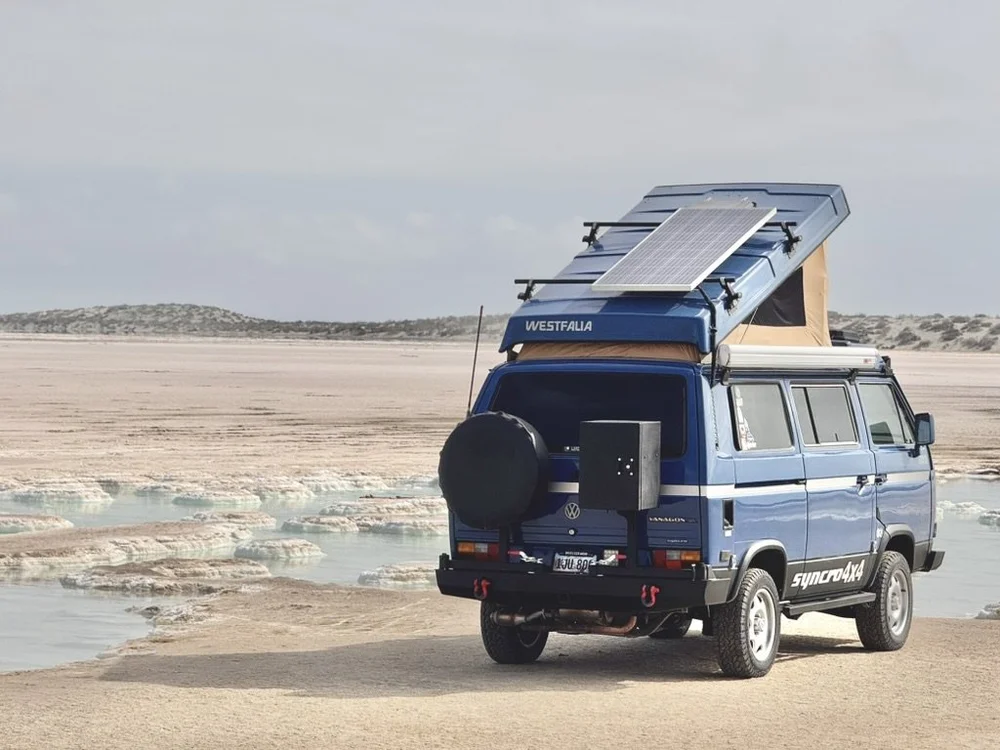
For Baja travel: decide whether your itinerary is mainly paved touring and established campsites, or repeatedly includes soft beach access and remote tracks. A Syncro can widen your options, but recovery planning, weather and tide awareness remain part of the trip. A remote location is an expensive place to discover deferred maintenance.

Is the Syncro faster or more economical?
The badge is about traction. With comparable engines and bodies, extra weight and driveline losses work against acceleration and fuel economy. But engine condition, gearbox ratios, tire diameter, roof equipment and road speed can overwhelm a simple badge-to-badge comparison. Do not apply one MPG figure to every Vanagon or assume that fitting a decoupler guarantees fuel savings.
Likewise, aftermarket 16-inch wheels do not make a van a factory 16-inch Syncro. Volkswagen’s heavier-duty factory version included additional changes to the body, brakes and running gear. Identify the vehicle before ordering parts.
04 / The maintenance workload
The Syncro adds a layer to the same foundation.
The shared work is substantial: engine servicing, fuel hoses and connections, brakes, steering, suspension, wheel bearings, rear CV joints, electrical grounds and charging, corrosion and water entry. Water-cooled vans also need the radiator, long coolant pipes, hoses, expansion system and heater circuits maintained as a whole.
Air-cooled vans, diesels and engine conversions need their own service plans. Camper plumbing, auxiliary electrics, roof seals and appliances add another maintenance schedule whichever wheels are driven.
| Check | Both layouts | Additional Syncro attention |
|---|---|---|
| At routine service | Leaks, fluids, brakes, steering play, rear CV boots, tires and age-sensitive hoses. | Front CV joints and boots, front final-drive leaks, propeller shaft and mounts, evidence of contact or damage. |
| Gear oil | Correct specification and service plan for the fitted transmission. | A separate front final-drive oil service; its gear oil is not the sealed VC’s silicone fluid. |
| Tires | Correct load capability, condition, age, pressures and alignment. | Closely matched rolling circumference across all four; consider the spare and replacement strategy too. |
| Controls | Clutch or automatic operation, gear linkage and brakes. | Fitted differential locks, vacuum lines, actuators, switches and any decoupler. |
| After rough use | Inspect for impact damage, loose parts, leaks and torn boots. | Include drivetrain protection, front axle hardware and propeller-shaft clearance. |
Put dates beside mileage
A low-mileage camper can still have old fluid and deteriorating rubber. As one published workshop reference, GoWesty recommends gearbox oil changes at 30,000 miles, including the front final drive on a Syncro, and two-year coolant, brake-fluid and manual-clutch-fluid services. These are GoWesty’s recommendations, not a universal schedule for every engine, conversion or fluid product. Set the actual plan with the shop maintaining your van.
Tires are part of the Syncro drivetrain. Different rolling circumferences make the axles turn at different speeds even on a straight road. Persistent mismatch can keep the VC working unnecessarily. Match size, make/model and wear as closely as required by your specialist, maintain the specified pressures and investigate uneven wear. Identical sidewall size alone does not establish identical circumference.
05 / What ownership costs
Budget for work, not a mythical average.
There is no defensible single annual maintenance bill for every 2WD Vanagon or Syncro. A recently sorted van and a long-stored project are different financial propositions. Separate routine servicing, catch-up repairs and major component failures before comparing costs.
A Syncro does not double the price of an oil change. Its financial difference is the additional hardware that may need attention, extra diagnostic and repair labor, more constrained tire choices and access to the right specialist. The bill can remain ordinary for a while, then rise sharply when several neglected systems need work together.
Real parts prices: a dated snapshot
The following public GoWesty listings were checked on October 21, 2026. They illustrate the difference in parts scope. Prices are in US dollars, parts only, before labor, freight, taxes and import charges. Recheck price, stock and fitment before ordering.
| Example | Listed price | What the number includes |
|---|---|---|
| 2WD 100 mm CV rebuild bundle | US$349 | Regular EMPI option: four joints, four boots and hardware; reuses axle shafts. Selected option was sold out. |
| Syncro 100 mm CV rebuild bundle | US$524 | Regular EMPI option: six joints, six boots and hardware. Front outer joints and boots are separate. Selected option was sold out. |
| New Syncro propeller shaft | US$499 | One additional assembly that a 2WD does not have. Installation and diagnosis are separate. |
The two regular CV bundles differ by US$175, but the Syncro bundle still excludes its two front outer joints and boots. It would be misleading to treat those two prices as complete, like-for-like installed axle-overhaul quotes.
Labor, shipping and downtime belong in the calculation
For a transparent budgeting example, suppose a quoted repair contains US$500 of parts and five labor hours. At an assumed US$100/hour, that is US$1,000 before tax and freight; at US$160/hour it is US$1,300. Those rates and hours are illustrative inputs, not LiveTheVanLife prices or a prescribed time for any particular repair.
Ask a gearbox or front-differential rebuilder what the base price covers, which internal parts are extra, whether removal and installation are included, how any exchange-core charge works and what happens if the casing or major gears are unusable. Include freight in both directions, applicable import costs and time without the van. A cheap advertised starting price is not the total repair cost.
Routine care and comprehensive restoration are different budgets
Our buyer’s guide gives a US$30,000–$50,000 planning range for completely going through a 2WD Westfalia mechanically. That is comprehensive project work, in addition to buying the van; it is not an annual maintenance estimate. Bodywork, paint, upholstery and camper refurbishment have separate scopes. A Syncro needs its own assessment rather than a guessed percentage added to that figure.
A useful annual reserve comes from your actual service plan: price the next year’s scheduled work, list known repairs, then keep a separate contingency for failures. Reserve money is money available if needed, not a prediction that it will all be spent.
06 / Reliability in real use
Fewer parts help. Condition decides.
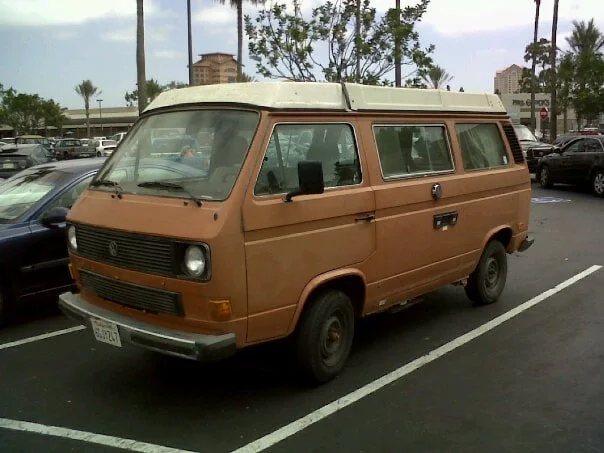
All else equal, the 2WD has fewer drivetrain components that can fail and fewer Syncro-specific parts to source. That makes it easier to support. It does not make a neglected 2WD more dependable than a properly maintained Syncro.
Reliability has at least three practical meanings: whether the van starts and completes the trip, whether its four-wheel drive works when needed, and how quickly a fault can be diagnosed and repaired. A Syncro can feel normal on dry pavement while its front-drive assistance is ineffective. An undocumented modification can make an otherwise simple repair harder to support away from home.
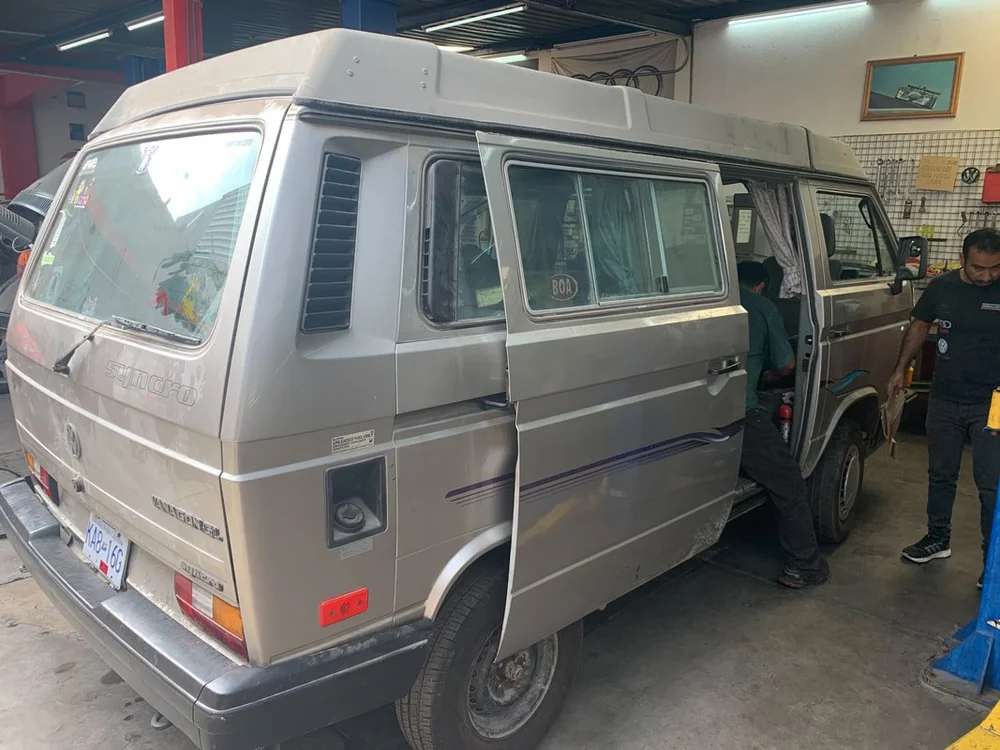
Symptoms worth investigating early
- Clicking, split CV boots or thrown grease: inspect the affected joints before contamination turns a small repair into a larger one.
- Vibration that changes with road speed or load: investigate tires, axles, mounts and, on a Syncro, the propeller shaft and front drivetrain.
- Unusual binding or hopping on tight turns: check tires, lock engagement and VC behavior. A parking-lot impression alone does not diagnose the coupling.
- A locker light or knob without verified operation: have the mechanism and controls checked. An indicator is not a complete mechanical test.
- Overheating, fuel leakage or brake problems: resolve the underlying fault before travel, regardless of drivetrain.
Have a Syncro specialist use an appropriate test procedure for the coupling and fitted driveline. Ad hoc wheel-spinning or jack tests can be misleading and hazardous. Maintain records of engine, gearbox and front-final-drive codes, modifications and parts used; take those records on a long trip.
The best reliability upgrade may be finishing the unfinished work. Cooling, fuel delivery, wiring, brakes and drivetrain condition need to support one another. A fresh engine or expensive suspension cannot compensate for neglected surrounding systems.
07 / From the period
Watch how Volkswagen explained it.
These original-era promotional films are preserved by independent YouTube uploaders. They show how the vehicles and equipment were presented when new. The upload dates are modern; the films are period material. Treat the demonstrations and sales claims as historical context, and use the correct current service information for your van.
Videos play on request. If an embedded player is restricted in your region or browser, use its YouTube link. Original footage belongs to its respective rights holders; the videos are embedded from their existing uploads.
08 / Make the choice around your travels
Which Vanagon fits your life?
Start with 2WD when…
- Your trips are mostly road-based with firm, maintained access roads.
- You value simpler maintenance and wider repair options.
- You would rather put the available budget into condition, camper comfort and travel.
- You want a factory automatic option.
Start with Syncro when…
- You repeatedly encounter conditions where front-wheel traction is useful.
- You value the G crawling gear and understand the fitted controls.
- You can support the additional maintenance and specialist work.
- You are willing to manage tire matching, parts logistics and recovery planning.
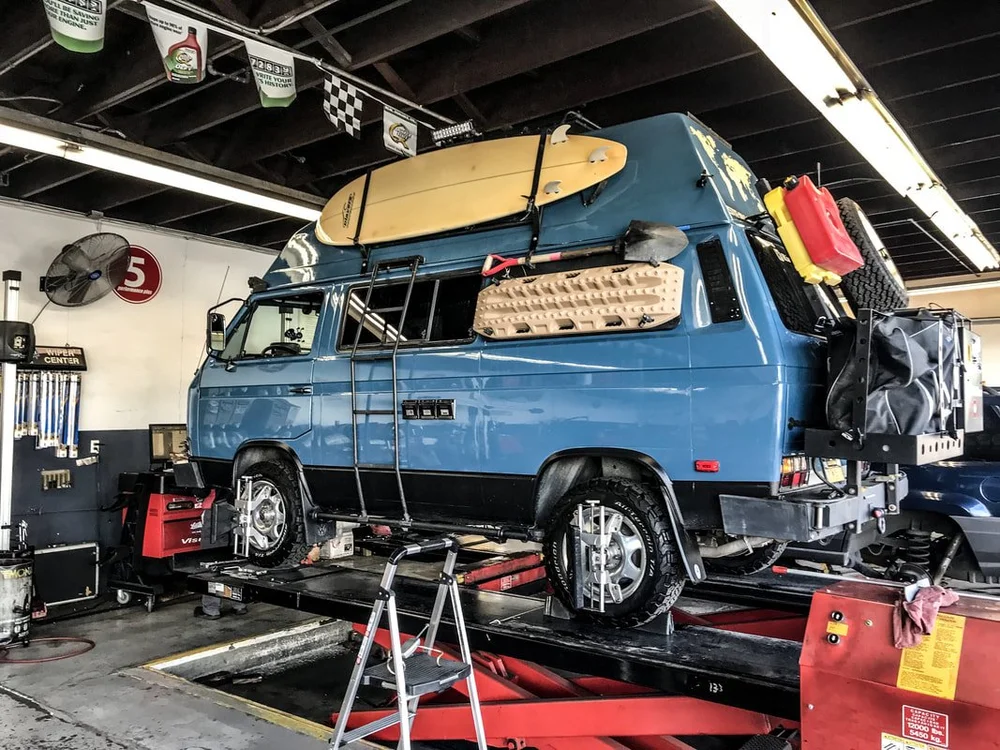
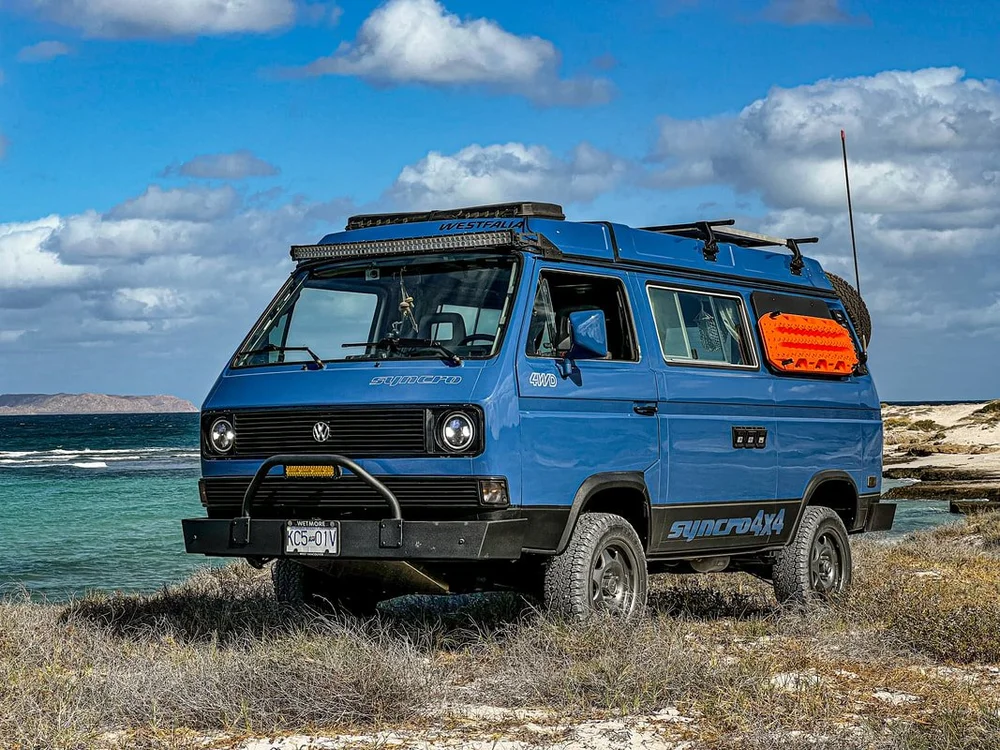
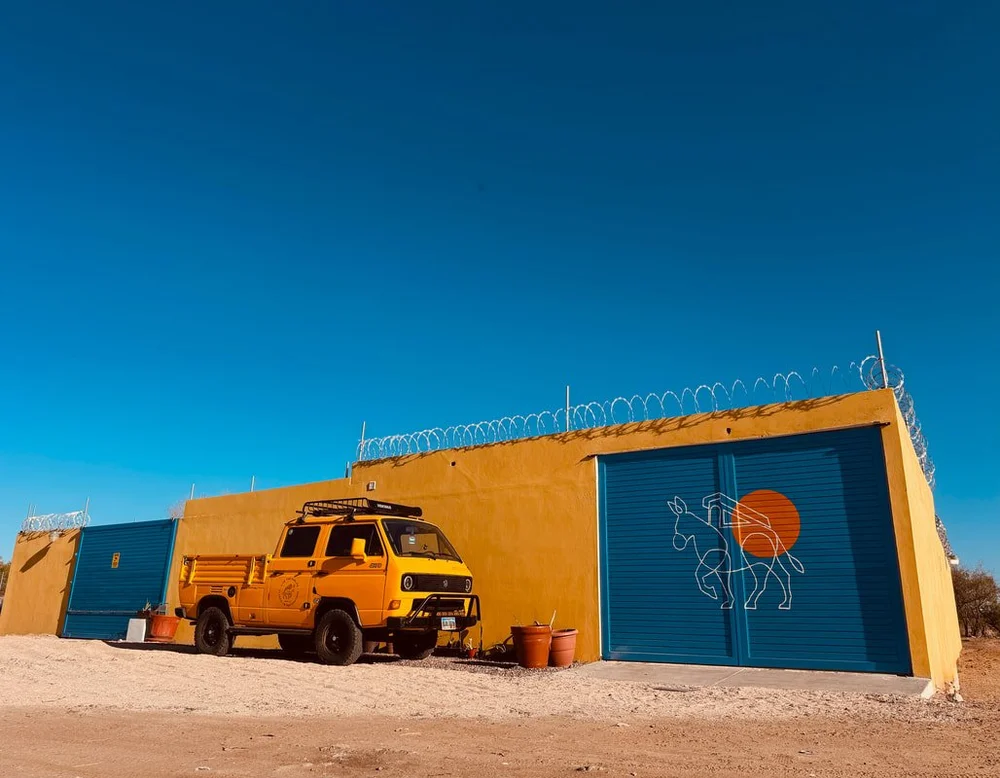
Our own Penny and Miki stories show why build philosophy matters alongside drivetrain choice. Penny’s 2WD platform evolved with a Subaru engine and extensive modifications. Miki’s Syncro build retained the 2.1-litre waterboxer with selected upgrades. They are individual, modified vans, not controlled tests of factory 2WD versus Syncro reliability.
Common questions
2WD vs. Syncro FAQs
Is every Volkswagen Westfalia a Syncro?
No. Westfalia identifies the camper conversion. Check the drivetrain and vehicle records separately; a pop-top or Westfalia badge does not establish four-wheel drive.
Is a Syncro always in four-wheel drive?
The standard factory T3 Syncro system is permanent four-wheel drive using a viscous coupling, with the amount of useful front-axle torque varying with conditions. Many surviving vans have decouplers or other modifications, so inspect the actual arrangement.
Does a Syncro have low range?
It has a low G crawling gear alongside four road gears. It does not have a conventional selectable low-range transfer case that multiplies every road gear.
Is the Syncro less reliable than a 2WD Vanagon?
It has more drivetrain components to maintain, which increases potential repair exposure. There is no reliable fleet-wide failure-rate comparison established here. Present condition and workmanship matter more than a simple ranking of two old-vehicle badges.
How much more does a Syncro cost to maintain each year?
There is no sound universal surcharge. Shared servicing can cost similarly; additional Syncro repairs vary greatly. Use the dated parts examples above, then obtain a vehicle-specific labor and repair scope.
Can I convert a 2WD Vanagon to Syncro?
Conversions exist, but this is a coordinated drivetrain, suspension, fuel-system and installation project, not a bolt-on front differential. Compare the full installed and supported scope with starting from a sound Syncro. LiveTheVanLife does not advertise a Syncro conversion package here.
Your van · Your next chapter
Build the plan around the van you have.
Planning restoration or mechanical work in La Paz? Send the year, drivetrain, fitted engine, known issues, service records and clear photographs. We can discuss the work around the vehicle’s condition and the way you want to travel.
Sources & further reading
Technical descriptions combine factory historical material, specialist guidance and the site’s documented builds. Cost examples are dated listings, not market averages. The comparison and budgeting examples are LiveTheVanLife’s editorial synthesis.
- Volkswagen Commercial Vehicles: 40 years of all-wheel drive — factory history and the distinct 16-inch model.
- LiveTheVanLife Syncro library — links to factory 094 gearbox manuals, training material and model-specific operating references.
- Viscowerkstatt Kern technical FAQ — viscous-coupling behavior, failure modes and specialist tests.
- GoWesty maintenance schedule and decoupler operation — specialist service recommendations.
- GoWesty parts listings: 2WD CV bundle, Syncro CV bundle and Syncro propeller shaft. Checked October 21, 2026.
- Keep exploring: buyer’s guide, Westfalia library, trip packing and spare parts, and mechanical services.
Photography: LiveTheVanLife’s existing Penny, Miki and workshop archives, except the credited Rutger van der Maar image. Layout crops are used where needed. Original diagrams: LiveTheVanLife Restorations.
